Start building a culture of growth today.
Join the hundreds of organisations embedding mentoring and empowering their teams with the Art of Mentoring.


6 September, 2021 | 2 mins read

Running a mentoring program is a start. Building a mentoring culture is the goal.
The difference matters. A program is an event, time-bound, participation-limited and easy to cut at the next budget review. A culture is the way an organisation operates, embedded in how people relate to each other, how leaders behave and how development is valued at every level.
A genuine mentoring culture has four defining characteristics. The organisation understands and communicates the strategic value of mentoring, not just its personal benefits. Access to mentoring is broad, not restricted to a select group of high-potential employees. Formal programs are well-managed and informal mentoring is actively encouraged. And mentoring is woven into how development happens across performance conversations, onboarding, leadership programs and succession planning.
In a true mentoring culture, being a mentor is seen as a mark of leadership, not an add-on to someone’s real job.
Art of Mentoring identified a set of human needs that, when met, create the conditions for positive organisational culture: a sense of belonging, having a voice and being heard, meaningful communication, genuine opportunity and someone to talk to.
Traditional structures, hierarchies, reporting lines and team meetings, are optimised for efficiency. They are not optimised for meeting these needs. Mentoring is one of the few organisational mechanisms that does.
Building a lasting mentoring culture requires four things.
First, connect mentoring to clearly defined business needs. Do not position it as a generic nice-to-have.
Second, get top management involved as mentors, not just as sponsors. Leadership behaviour is the most powerful signal an organisation can send.
Third, provide proper training for mentors and mentees, and make ongoing development available beyond onboarding.
Fourth, recognise and reward mentoring behaviour consistently. If the time and care people invest in mentoring others is never acknowledged, that behaviour will gradually disappear.
Art of Mentoring’s 2020 research project, drawing on data from over 13,000 participants, found that 85% of mentees and almost 80% of mentors said their mentoring experience had a positive impact on their impression of the organisation that offered it.
A mentoring culture is not just a retention strategy. It is a brand asset, an innovation enabler and a signal to every current and potential employee that your organisation takes the development of its people seriously.
Download our introductory guide ‘The Ripple Effect’ to mentoring and learn the secrets to unleashing hidden value in your organisation
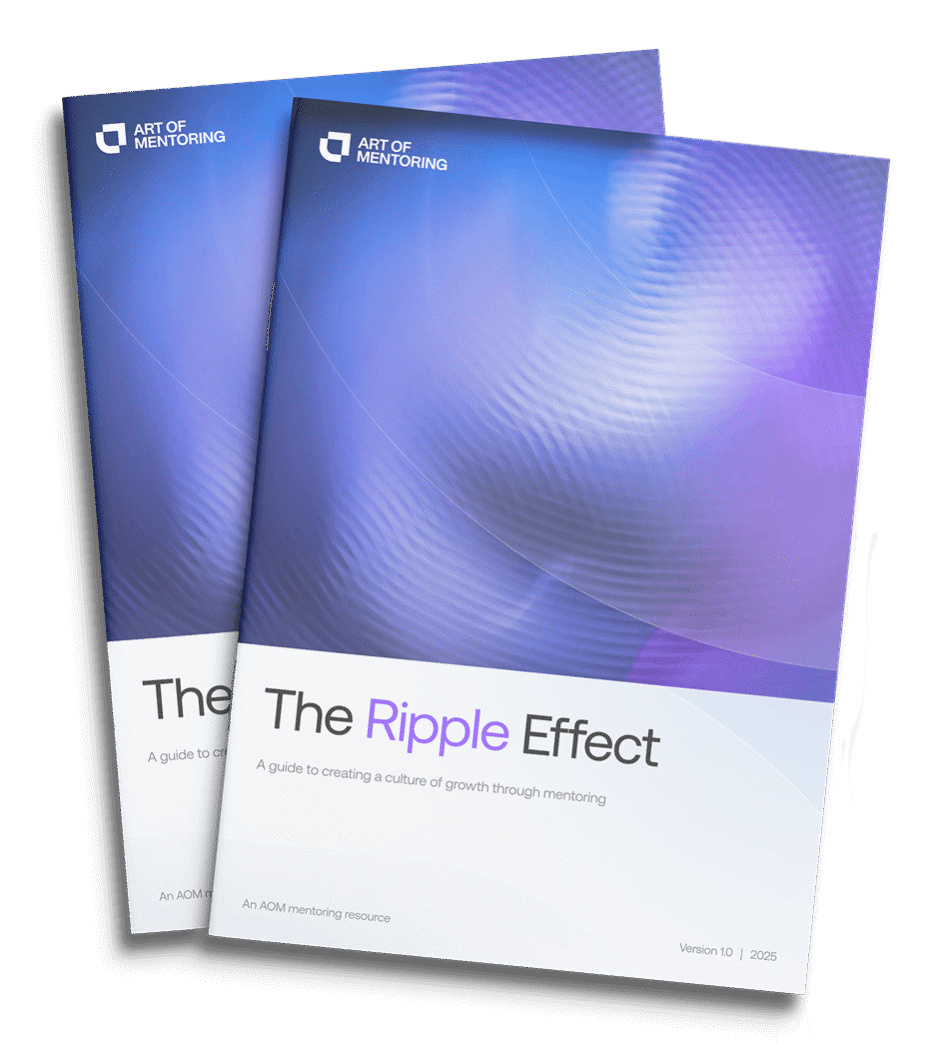
Compiled by our mentoring experts, this guide will introduce you to the secrets of unleashing hidden value in your organisation.
Art of Mentoring CRM needs the contact information you provide to us to contact you about our products and services. You may unsubscribe from these communications at any time. For information on how to unsubscribe, as well as our privacy practices and commitment to protecting your privacy, please review our Privacy Policy.
"*" indicates required fields
Join the hundreds of organisations embedding mentoring and empowering their teams with the Art of Mentoring.

By subscribing, you agree to Art of Mentoring contacting you about our products and services. You may unsubscribe from this communicaiton at any time using the ‘unsubscribe’ link at the bottom of our emails. The Privacy Policy, located on our website outlines our commitment to protecting your privacy.
"*" indicates required fields