Start building a culture of growth today.
Join the hundreds of organisations embedding mentoring and empowering their teams with the Art of Mentoring.


24 March, 2020 | 2 mins read

A well-designed, well-run mentoring program can be one of the most impactful investments an organisation makes in its people. But impactful needs to mean more than a feeling. It needs to be measured, reported and used to continuously improve.
Organisations that set strong goals, track them consistently and adjust their programs accordingly achieve significantly better outcomes than those that rely on intuition alone.
Art of Mentoring has adapted Roger Kaufman’s Five Levels of Evaluation model into a practical framework for tracking mentoring program impact at every level.
Level 1, Inputs: Are the program resources and processes working? Are participants completing training and rating materials as valuable?
Level 2, Learning Acquisition: Are mentors and mentees developing the knowledge and skills the program intends?
Level 3, Application of Learning: Are participants applying what they have learned and achieving their stated goals?
Level 4, Organisational Outcomes: Is the program generating measurable organisational impact, improved retention, engagement, or leadership pipeline growth?
Level 5, Societal Outcomes: Is the program contributing to broader change, such as more women in leadership or greater industry diversity?
Every well-designed program should set goals at the first four levels at minimum. A Level 5 goal provides the compelling reason that is particularly powerful for recruiting mentors who want to contribute to something beyond their own organisation.
For a graduate mentoring program, goals might look like this.
Level 1: 90% of participants rate training materials as valuable and feel well-matched.
Level 2: 90% of participants report achieving their stated learning goals.
Level 3: Mentored new hires are performing in role faster than their unmentored peers.
Level 4: First-year turnover is measurably lower for program participants.
Level 5: Increased representation of diverse graduates in the organisation’s talent pipeline.
These are not aspirational statements. They are measurable commitments that create accountability and drive continuous improvement.
Sun Microsystems tracked mentoring ROI over an extended period and documented 6.7 million dollars in turnover savings, with an ROI exceeding 1,000%. Research in Fortune 500 companies consistently identifies retention, promotion, satisfaction, morale and productivity as the five most commonly reported impacts of formal mentoring programs.
At Art of Mentoring, we work with clients including the NSW Department of Primary Industries to track mentee outcomes over multiple years, comparing career progression and retention against unmentored peers. That kind of longitudinal evidence is what secures ongoing program investment.
The most common measurement mistake is treating it as an afterthought, something to figure out once the program is already running. The most effective programs define their success metrics during the design phase, before the first application is received.
What does success look like at six months? At twelve months? At three years? Answering these questions at the start shapes every design decision that follows, and creates the foundation for a program that improves with every iteration.
Download our introductory guide ‘The Ripple Effect’ to mentoring and learn the secrets to unleashing hidden value in your organisation
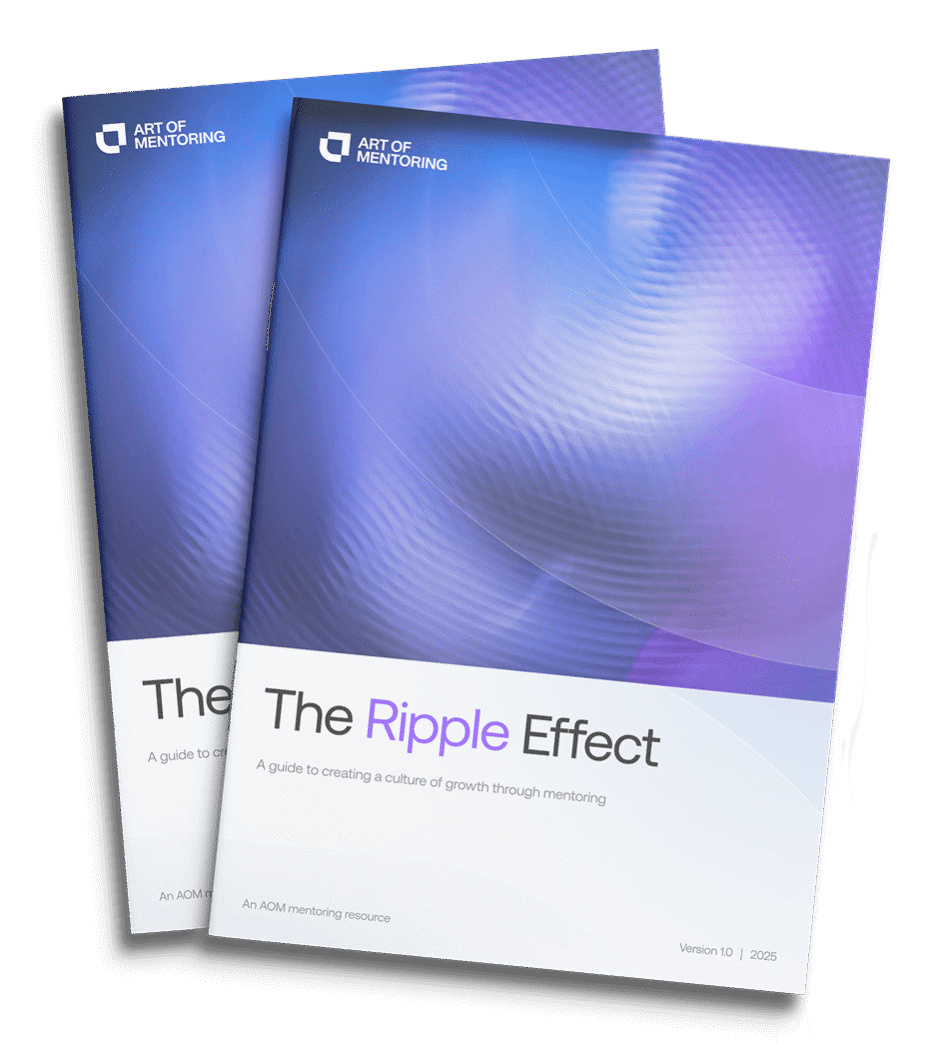
Compiled by our mentoring experts, this guide will introduce you to the secrets of unleashing hidden value in your organisation.
Art of Mentoring CRM needs the contact information you provide to us to contact you about our products and services. You may unsubscribe from these communications at any time. For information on how to unsubscribe, as well as our privacy practices and commitment to protecting your privacy, please review our Privacy Policy.
"*" indicates required fields
Join the hundreds of organisations embedding mentoring and empowering their teams with the Art of Mentoring.

By subscribing, you agree to Art of Mentoring contacting you about our products and services. You may unsubscribe from this communicaiton at any time using the ‘unsubscribe’ link at the bottom of our emails. The Privacy Policy, located on our website outlines our commitment to protecting your privacy.
"*" indicates required fields