Start building a culture of growth today.
Join the hundreds of organisations embedding mentoring and empowering their teams with the Art of Mentoring.


3 February, 2021 | 2 mins read

There is no shortage of received wisdom about mentoring. The problem is that a lot of it is wrong. And the consequences of acting on these myths range from programs that underperform to relationships that quietly fail.
Here are the nine most common lies about mentoring, and what the evidence actually shows.
The truth is that structure matters more than ever. Humans need it when they are uncertain, and mentoring relationships are no exception. Informal, unstructured mentoring can work for a small number of experienced, self-directed professionals. For most people, structure provides the framework for honest conversations, clear objectives and consistent progress.
Any manager has the potential to mentor. But the skills required are fundamentally different from management skills, and research shows that most managers significantly overestimate their own mentoring ability. Managing is about achieving organisational goals. Mentoring is about helping a person achieve their own. Confusing the two is one of the most common reasons mentoring relationships fail.
For most people, particularly those from underrepresented groups, approaching a senior professional for mentoring support is genuinely intimidating. Structured programs remove this barrier by making the match for participants, and in doing so, open mentoring to people who would never self-select into it.
Left to their own devices, most people gravitate toward mentors who are too similar to themselves or too senior for the relationship to be productive. A well-designed matching process consistently produces better outcomes than self-selection.
Lie 5: Mentoring programs are easy to implement. They are not, but with the right support they are absolutely manageable.
Lie 6: The most successful professionals make the best mentors. Career success and mentoring skill are different things entirely.
Lie 7: The best time to start a mentoring program is when things are stable. Disruption is precisely when mentoring is most valuable.
Lie 8: The number of participants reflects the program’s success. Quality of relationships and goal achievement matter far more than headcount.
Lie 9: Mentoring is a nice-to-have. With documented ROI in the thousands of percent, it is one of the most commercially sound people investments available.
It is not. But it does require commitment, proper design and the willingness to move past the assumptions that have held programs back for years.
If any of these nine myths have shaped how your organisation approaches mentoring, the good news is that none of them are hard to fix.
At Art of Mentoring, we work with organisations to design programs that are built on evidence, not received wisdom. Get in touch if you want to talk through what that looks like for your team.
Download our introductory guide ‘The Ripple Effect’ to mentoring and learn the secrets to unleashing hidden value in your organisation
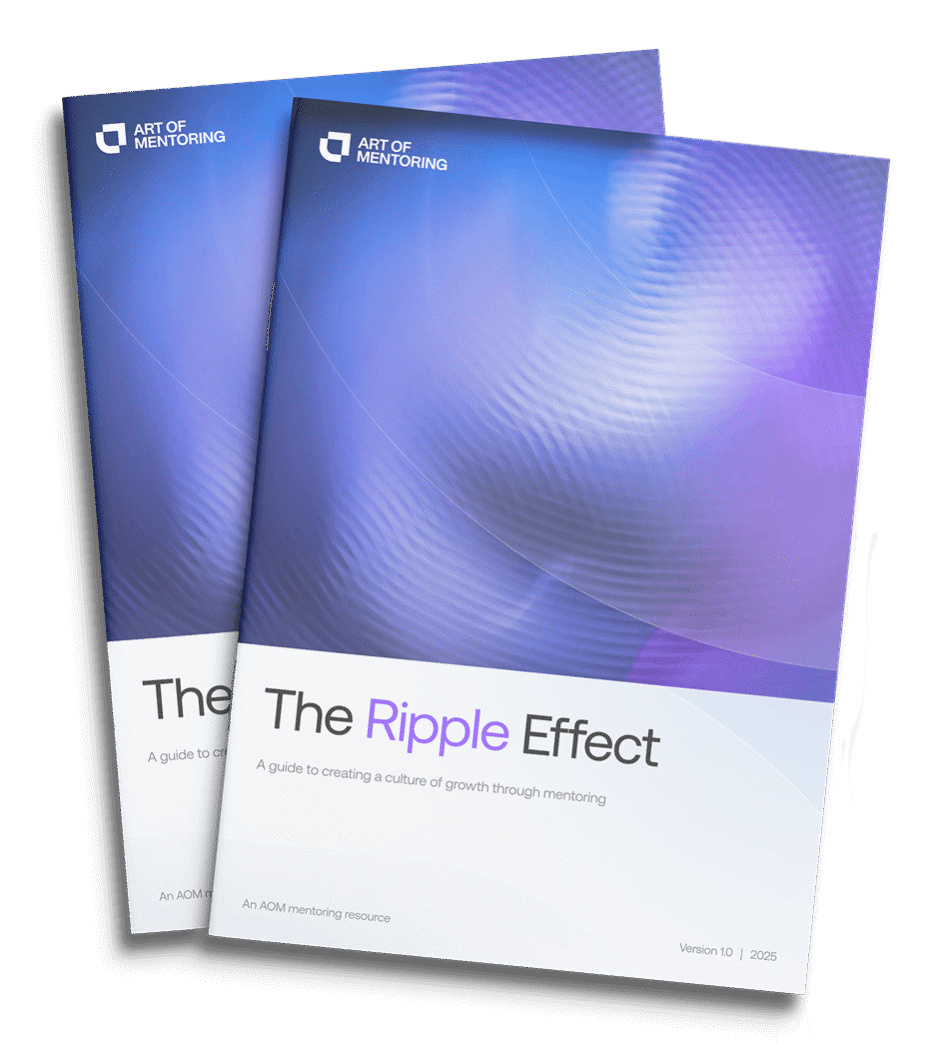
Compiled by our mentoring experts, this guide will introduce you to the secrets of unleashing hidden value in your organisation.
Art of Mentoring CRM needs the contact information you provide to us to contact you about our products and services. You may unsubscribe from these communications at any time. For information on how to unsubscribe, as well as our privacy practices and commitment to protecting your privacy, please review our Privacy Policy.
"*" indicates required fields
Join the hundreds of organisations embedding mentoring and empowering their teams with the Art of Mentoring.

By subscribing, you agree to Art of Mentoring contacting you about our products and services. You may unsubscribe from this communicaiton at any time using the ‘unsubscribe’ link at the bottom of our emails. The Privacy Policy, located on our website outlines our commitment to protecting your privacy.
"*" indicates required fields