Start building a culture of growth today.
Join the hundreds of organisations embedding mentoring and empowering their teams with the Art of Mentoring.


17 October, 2023 | 2 mins read

Of all the forms of workplace discrimination, ageism is among the most pervasive and the least discussed. And its impact falls disproportionately on women.
Women over 55 face a compounding set of barriers that most diversity and inclusion agendas have yet to meaningfully address. The World Health Organization estimates that if just 5% more people aged 55 and older were employed, Australia’s national economy would benefit by up to 48 billion dollars annually. That is not a niche issue. It is a significant economic and cultural one.
Women over 55 are the fastest growing group experiencing homelessness in Australia. Workforce participation drops sharply after age 50 for women, a full decade earlier than for men. Just one in seven women over 55 who are actively seeking work is likely to find it. The causes are interconnected: the gender pay gap, career interruptions for caring responsibilities, bias in recruitment and promotion, and the compounding disadvantage of returning to the workforce after time away. A further 18% of organisational leaders admit they would not hire someone aged 65 or above at all.
Organisations that overlook older women are leaving a significant advantage on the table. OECD research shows that organisations with 10% more older workers than the sector average record 1.1% higher productivity. Older women in particular bring interpersonal depth, loyalty and accumulated knowledge that takes decades to develop.
Many mature female employees are vital, vibrant, interesting and interested women who have a lot of wisdom and experience to share. And yet the evidence suggests they are being completely under-utilised.
The interventions that work here are not fundamentally different from what organisations already apply in other areas of gender diversity. The difference is intentionality. Review your diversity agenda to make sure older workers are explicitly included, not implied. Align your policies with that agenda and publish them. Audit your recruitment experience for age-related language and screening bias. And build mentoring programs that create genuine two-way value between older employees and senior leaders.
Structured mentoring is one of the most effective tools for retaining and developing older women. It provides visibility, advocacy and a consistent relationship with someone invested in their success, three things that are often absent.
Reverse mentoring, where older employees share their experience with younger or more senior leaders, is equally powerful. It positions older workers as contributors of strategic value rather than recipients of support, and builds cross-generational understanding that benefits the whole organisation.
Download our introductory guide ‘The Ripple Effect’ to mentoring and learn the secrets to unleashing hidden value in your organisation
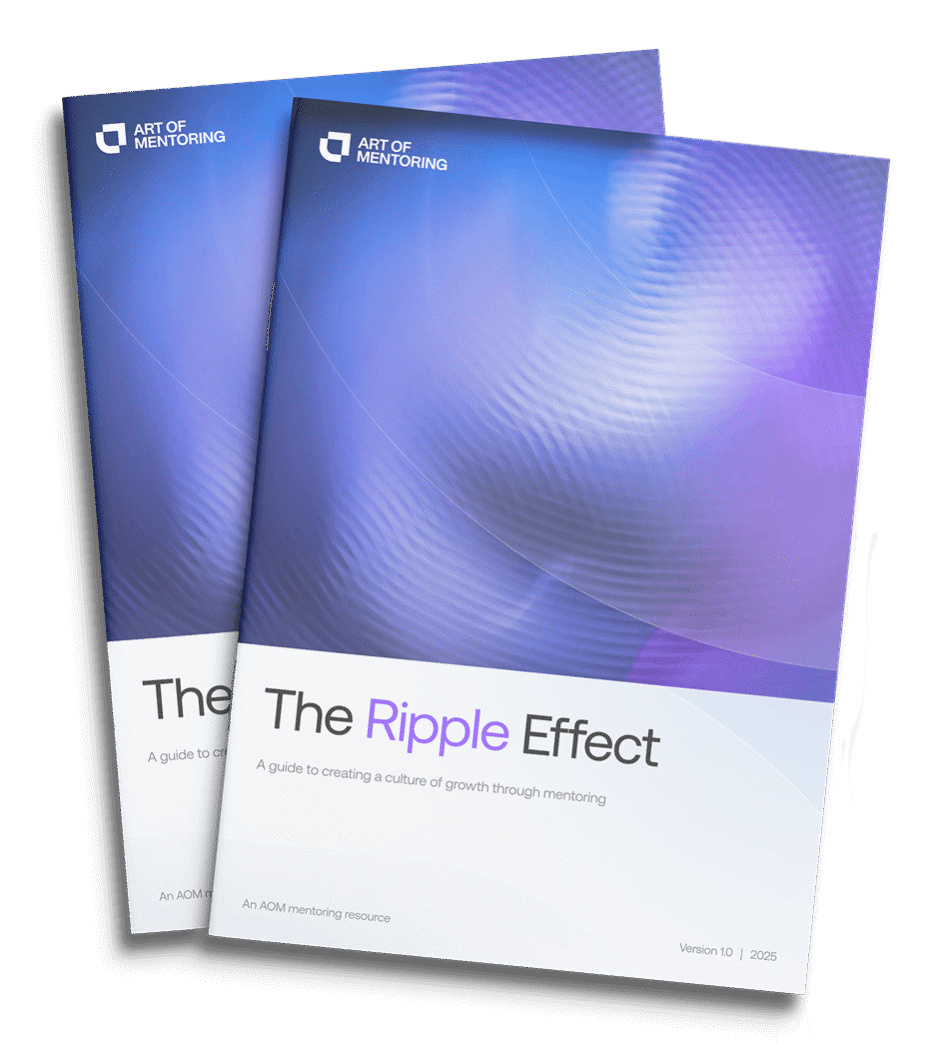
Compiled by our mentoring experts, this guide will introduce you to the secrets of unleashing hidden value in your organisation.
Art of Mentoring CRM needs the contact information you provide to us to contact you about our products and services. You may unsubscribe from these communications at any time. For information on how to unsubscribe, as well as our privacy practices and commitment to protecting your privacy, please review our Privacy Policy.
"*" indicates required fields
Join the hundreds of organisations embedding mentoring and empowering their teams with the Art of Mentoring.

By subscribing, you agree to Art of Mentoring contacting you about our products and services. You may unsubscribe from this communicaiton at any time using the ‘unsubscribe’ link at the bottom of our emails. The Privacy Policy, located on our website outlines our commitment to protecting your privacy.
"*" indicates required fields